
Modeling Burn Severity Using 2020 Cameron Peak Wildfire Data
This project examined how burn severity varied across the 2020 Cameron Peak Fire, which burned over 208,000 acres in northern Colorado. Using Monitoring Trends in Burn Severity, or MTBS, raster data as the response variable, the goal was to model burn severity as ordered classes rather than as a simple continuous value. The project connected burn severity patterns to environmental predictors such as pre-fire vegetation, elevation, slope, aspect, canopy cover, and possible climate variables.
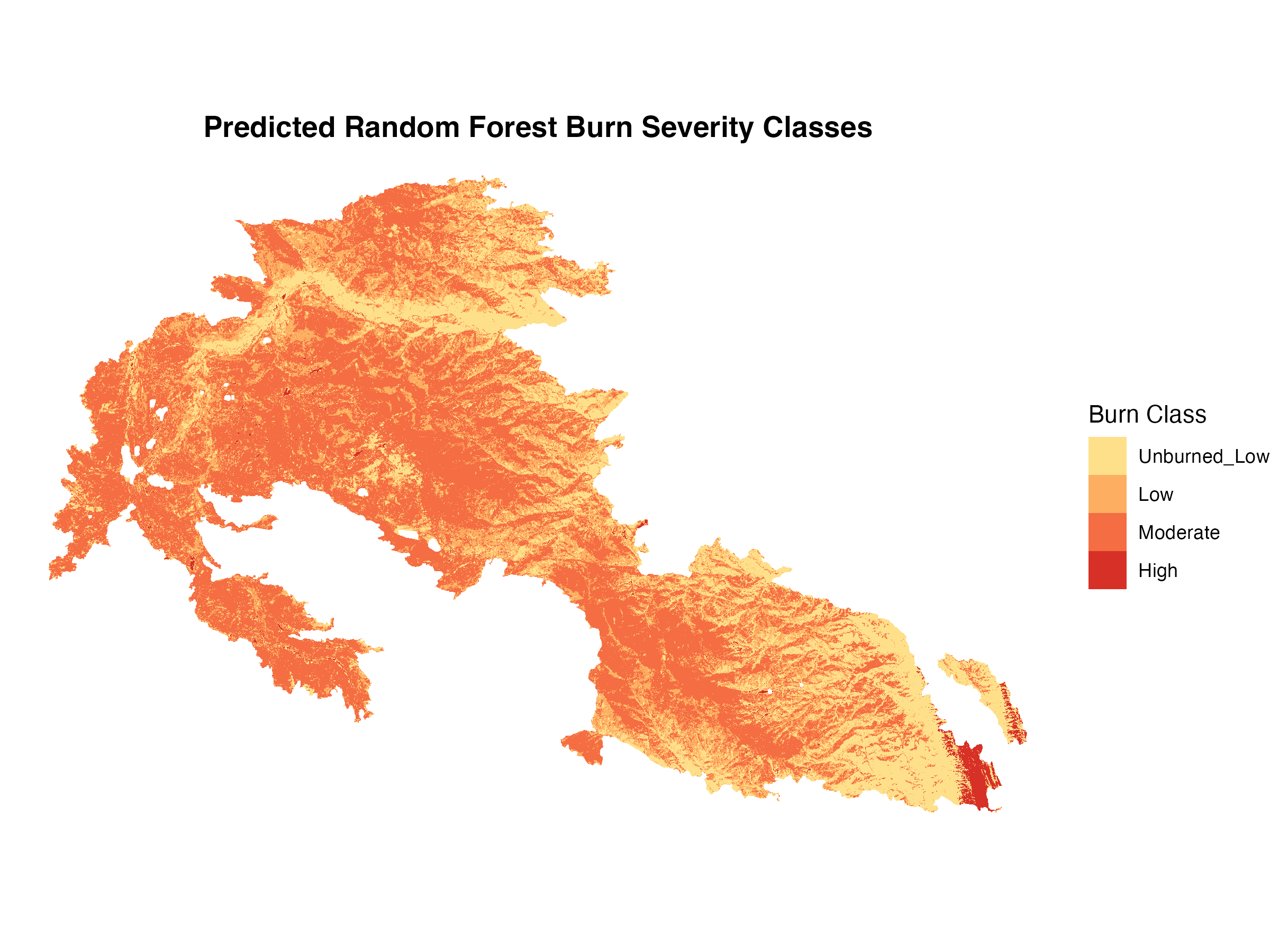
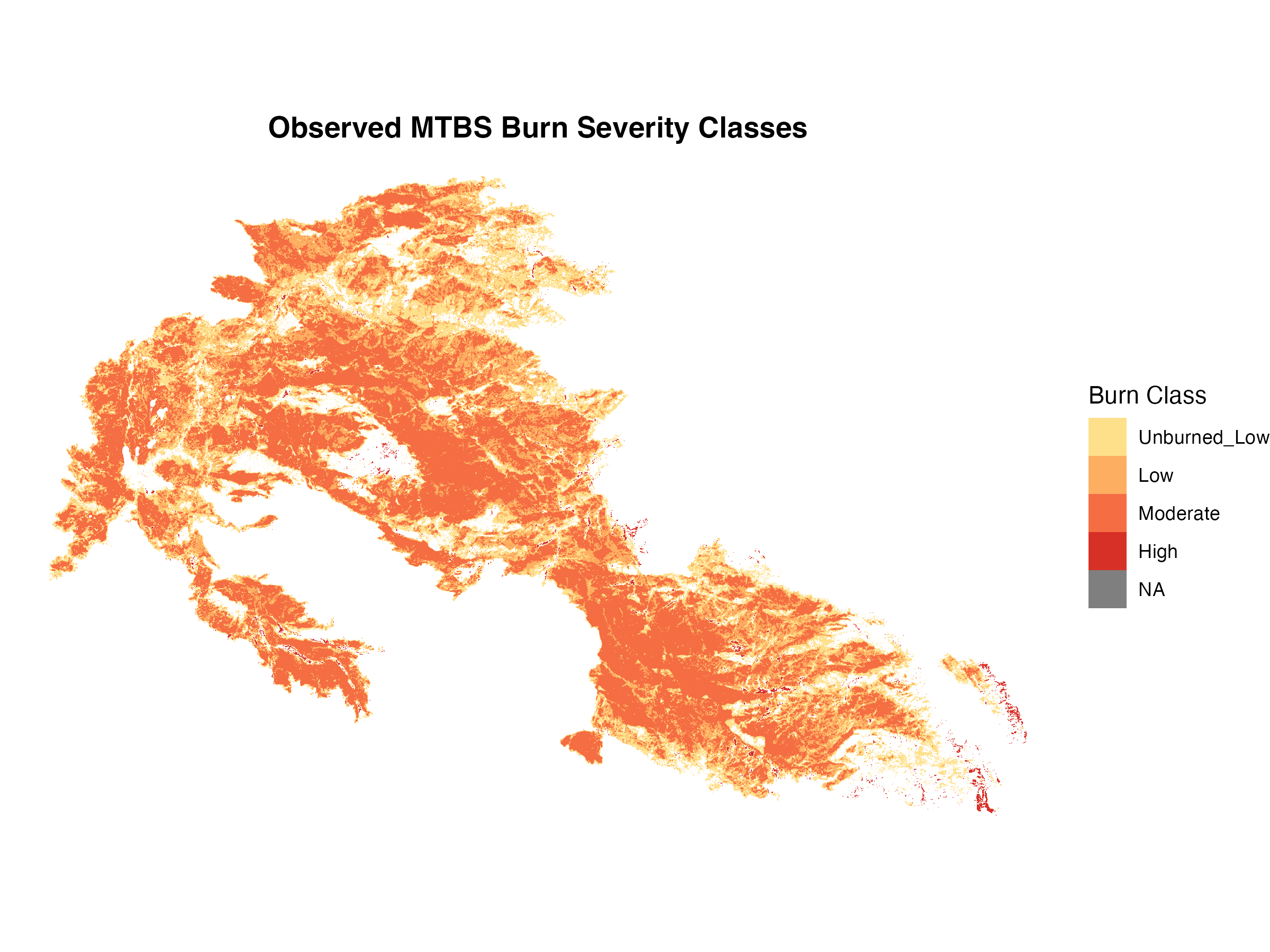
For the analysis, I worked with multiple spatial datasets, including MTBS burn severity rasters, Landsat-derived NDVI, USGS 3DEP elevation data, and optional vegetation or climate datasets such as LANDFIRE, Daymet, or PRISM. The workflow involved clipping all datasets to the fire perimeter, projecting them into a common coordinate system, resampling them to a shared spatial resolution, and preparing the data for spatial modeling. The project proposed using ordinal logistic regression because burn severity is classified into ordered categories, with random forest or gradient boosting as comparison models.
Methods / Workflow
Collected MTBS burn severity raster and fire perimeter data
Used Landsat NDVI to represent pre-fire vegetation conditions
Derived terrain variables such as elevation, slope, and aspect from USGS DEM data
Clipped, projected, and resampled spatial layers to a common format
Modeled burn severity classes using ordinal regression and machine learning approaches
Used spatially aware validation to avoid overstating model accuracy due to spatial autocorrelation
Conclusion
Across all classes, the logistic regression has a 53% accuracy.
Errors are significantly spatially autocorrelated under join count test (p < 0.0001).
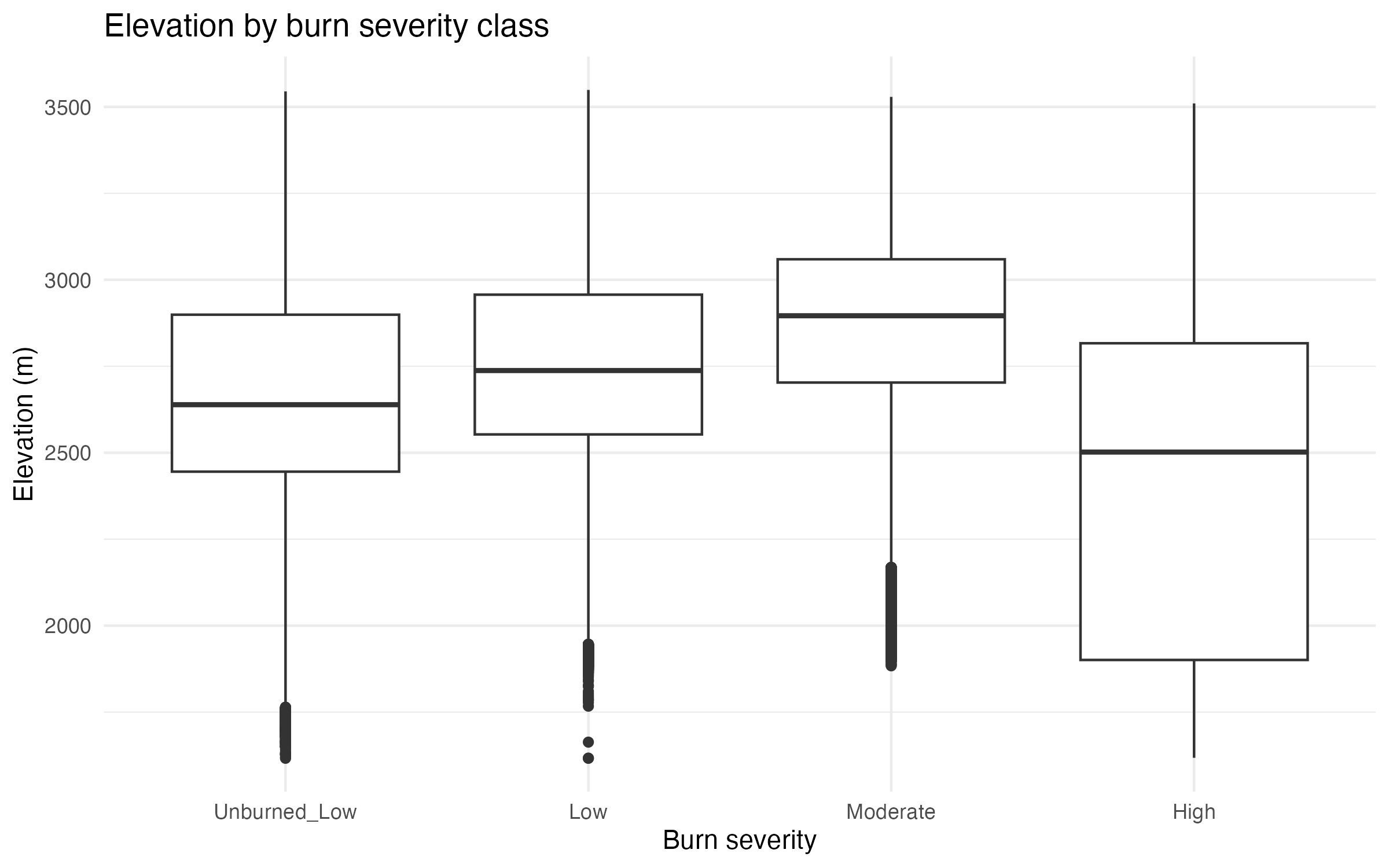
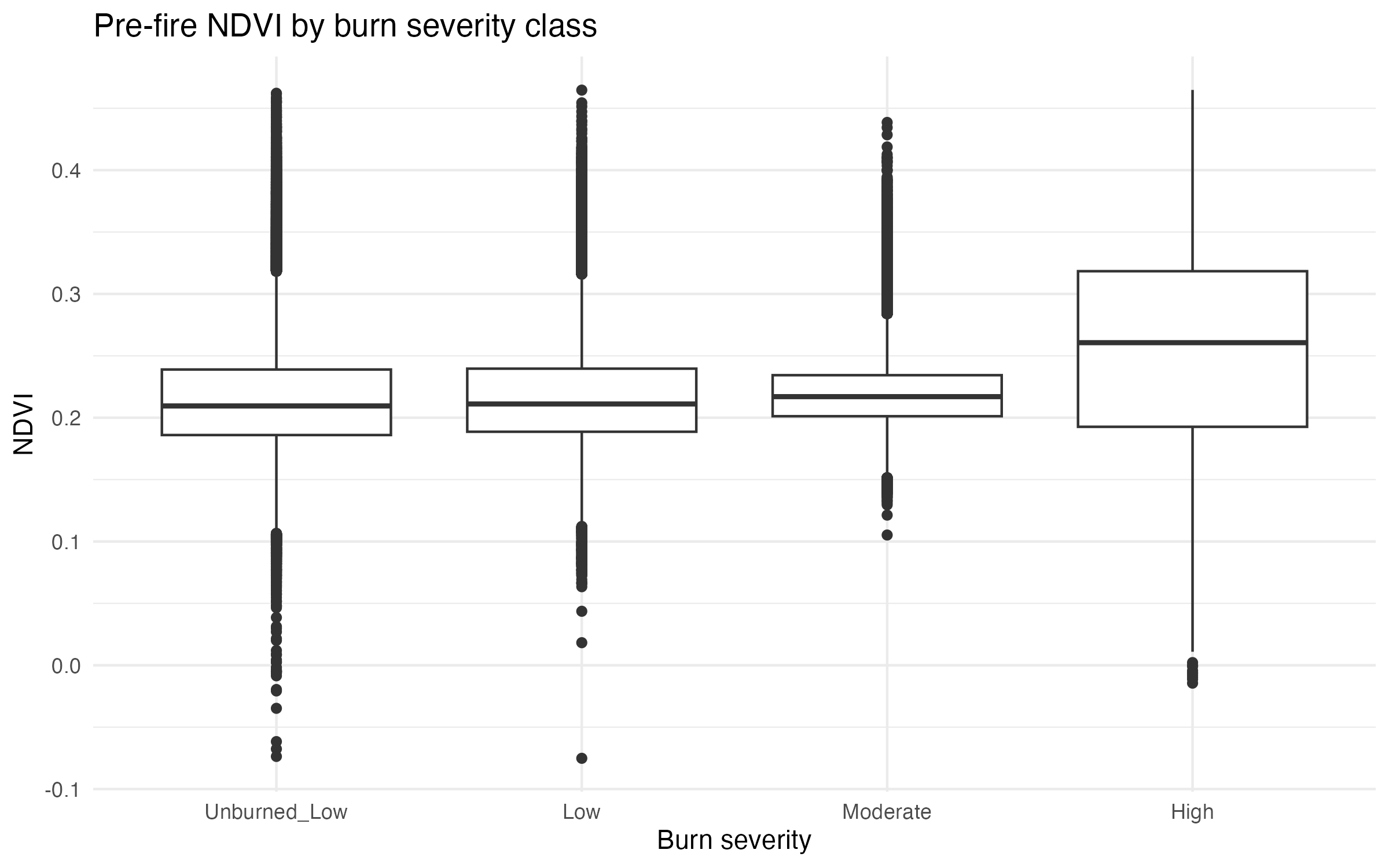
NDVI and elevation alone are weak predictors of potential burn severity but can be surprisingly effective without other variables.
Predictors were weak and few in number. Further study will require more climate and vegetative variables of interest.
Combustion and fire propagation is a complex process with anisotropic effects.