
Venus Radiative Transfer Model
This active project helps to upgrade a current Venus aerosol and radiative transfer model by implementing an improved method of calculating atmospheric absorption and scattering called “correlated K coefficients”. The goal is to produce a model that more accurately describes the role of solar heating in the Venus atmosphere and clouds.
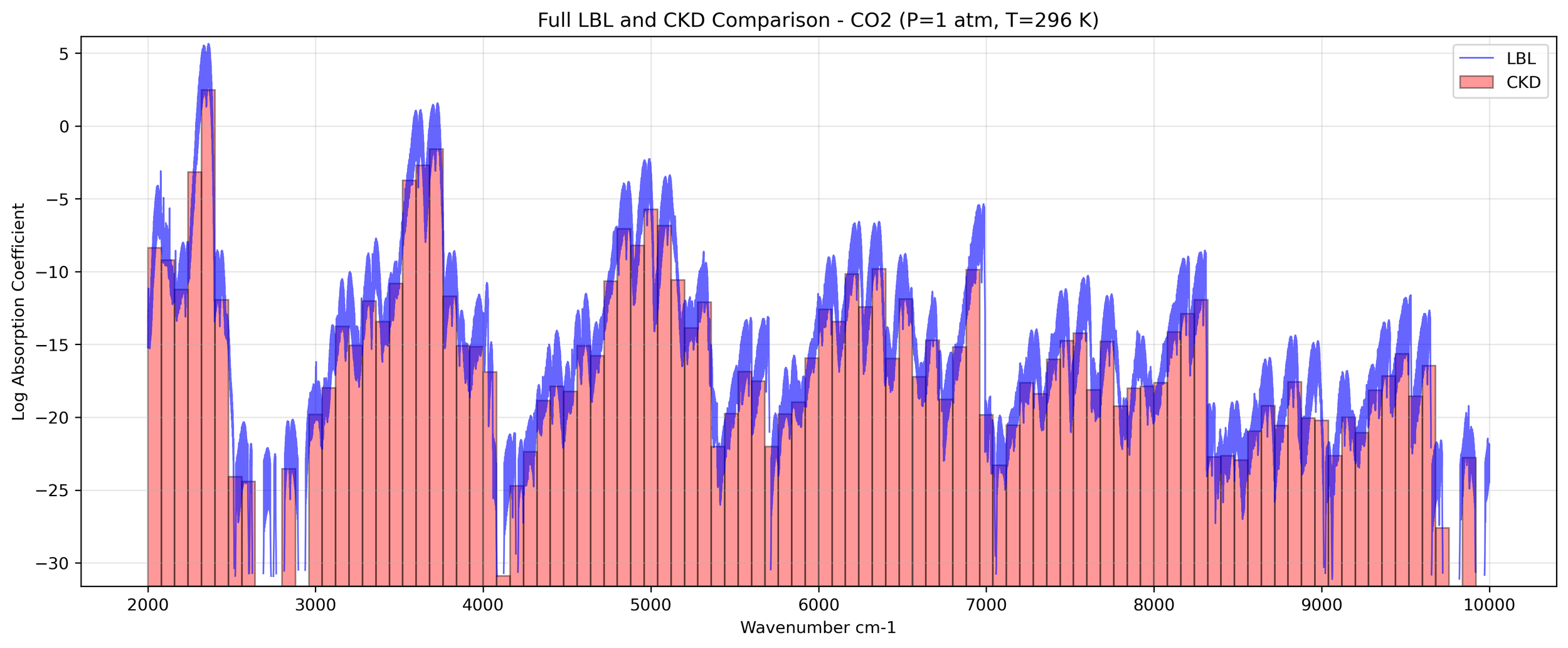
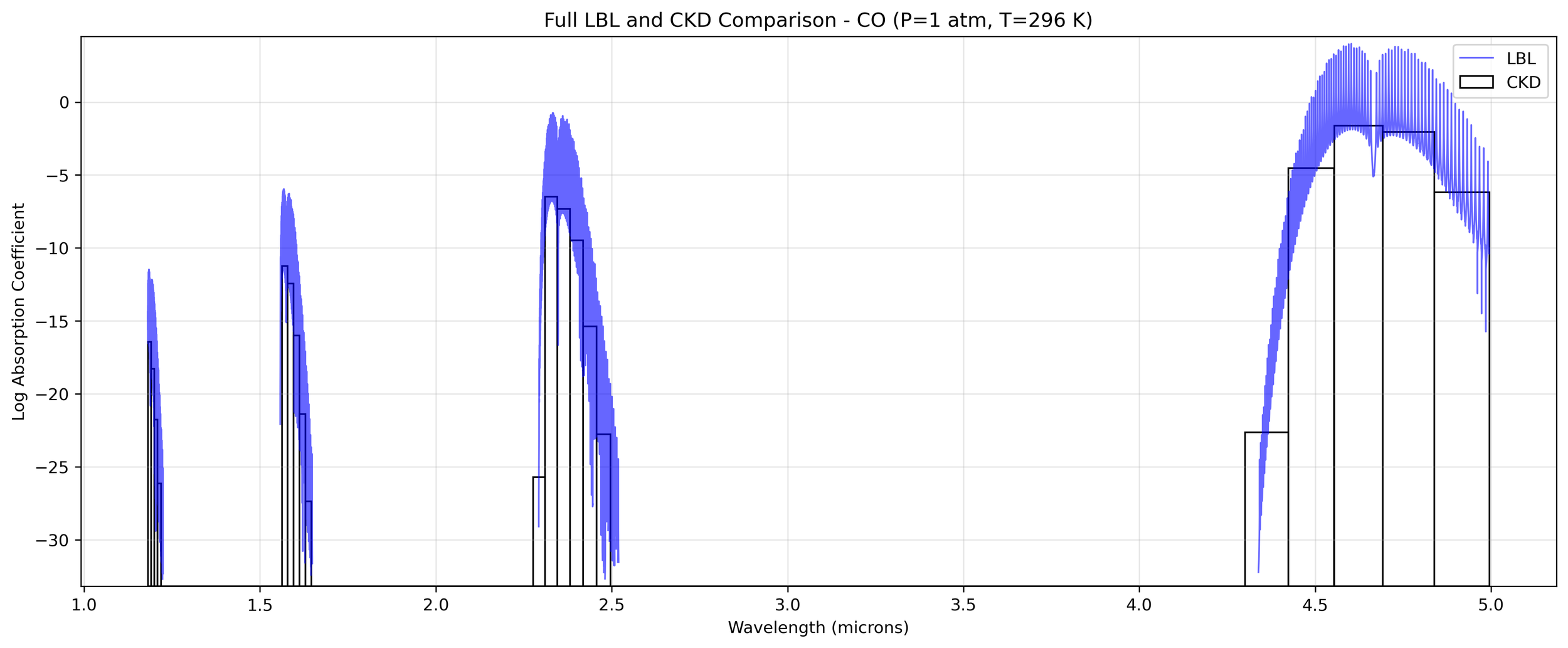
we start by selecting a chemical species and setting a window to observe in units of either microns or wavenumber. With these values we can get our absorption coefficients using the HITRAN database. One must use very small step sizes in these calculations in order to get very small features in this spectra.
With the absorption coefficients and our window of wavenumber, we can calculate transmissivity. The most standard way to calculate this is by using the line by line integration method. The problem with this method is that it requires high computing power and time, not too efficient, especially for larger windows and smaller step sizes. This is where correlated K comes in. By splitting the window into equal intervals and resorting the absorption coefficients, we can get the average value for the absorption coefficients. These averages get pretty close to the actual value of the line by line data and it is easier to integrate. The final goal is to do this for the complete atmosphere of Venus and for a range of temperatures.